North Country Earth Action
  • How to use our site
    • Contact Us
      • National Climate Bills, proposals
    • State, County, Local mandates,proposals
  • Bills.Proposals, Visionary legislation
  • FEET to the FIRE
    • Local and Upstate Climate Organizations
      • Local Climate Smart Communities
  • Books, movies, links, articles,podcasts
  • How to use our site
    • Contact Us
      • National Climate Bills, proposals
    • State, County, Local mandates,proposals
  • Bills.Proposals, Visionary legislation
  • FEET to the FIRE
    • Local and Upstate Climate Organizations
      • Local Climate Smart Communities
  • Books, movies, links, articles,podcasts
Search
Picture


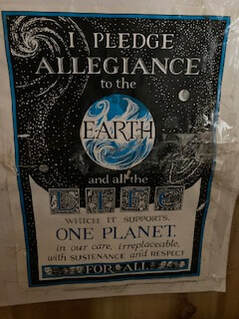
I pledge allegiance  
to the earth
and all the life
which it supports
one planet
in our care, irreplaceable
with sustenance and respect 
for all


The Voice of Bernice Mennis- Intersections
For me, poetry, art, literature...as well as science, facts, investigative reporting inform my thoughts and my actions in this world.  In this blog I will allow myself to intersect with all the voices that speak within me and, hopefully, those voices might touch others into action to protect and preserve our earth. Bernice Mennis
ON Language

1/11/2021

1 Comment

 
Barry Lopez captures in his beautifully written essays his close and deep observations of places and beings: the Arctic, his stream near where he lives in Oregon, animals, wilderness, life. He recently died but hIs words live on as inspiration for why we do the work we do: “I know of no restorative of heart, body, and soul more effective against hopelessness than the restoration of the earth.”
In the first blog I wrote about poetry as language that can capture what is beyond words-- like land, like earth, like nature. Lopez writes:“ The land is like poetry: it is inexplicably coherent, it is transcendent in its meaning, and it has the power to elevate a consideration of human life.” Poetry and earth are layered. allow seeming contradictions, welcome paradox, ambiguity, mystery, all that is beyond “reason” and beyond language.
Both “languages” allow us to navigate interconnections that are complex, intricate, inexplicable--that are known and felt, that touch heart and spirit.I have been thinking of how language shapes how we see and understand ourselves and our place in the world, and how we accept concepts as “natural” rather than internalized and imposed cultural values. And how important it is to question what we have acccepted--to redefine our world, to revision, to remember an earlier way of seeing and naming which indigenious cultures still retain and which, as children, we knew.
How we look at earth--at land, water, trees, air--is shaped by the language we have inherited, seeing what have learned to see, accepting what we have learned. But what would it mean to see from the point of view of trees or plants, water or mountains...(or from native peoples before the invasion)? What does it mean that we have learned to see human beings (or some human beings) as “objects,” as commodities and earth as something to to be used and exploited, mined and drilled--as logs and timber rather than living trees, minerals (gold, uranium, copper), coal, oil, gas as valuable only in terms of what we can get from them.    What would it mean to see earth and water as living, as having rights to live, to see all beings as living beings, to view water and mountains as sacred and to value elders who know the land, the history and stories of each place on the earth on which they were born, as elders who still speak their native tongue, their language.
Throughout history those who want to dominate and suppress another culture have tried to silence people from speaking their own language (to restrict music, art, culture) commanding “the other” speak only the oppressor’s tongue and forget all they knew, to lose their language. In a recent newspaper article in our Post Star, people of different tribes spoke of the urgent necessity of protecting their elders from Covid, not just to save lives but to save knowledge, history, story, medicine, memory, wisdom..., revering the remnant still speaking the native tongue, still tied intimately to earth, revering mother earth. Mother, not object, not commodity, sacred.
PBS has a series “Standing on Sacred Ground” focusing on different indigenous people--shamans and elders--throughout our world-- in the Arctic, in Peru, in Australia and Hawaii, Ethiopia, New Guinea...all speaking in their own distinct native tongues, but also allspeaking the same language, able to communicate with each other about the sacred, the waters the earth. Sacred--a foreign tongue to so many of us, so rare--so direct, so honest, coming without artifice or rhetoric, no space between heart and words, like poetry.    Barry Lopez speaks of this honesty: “one of the reasons native people still living in some sort of close, daily association with their ancestral lands are so fascinating to those who arrive from the rural, urban, and suburban districts of civilization is because they are so possessed of authority. They radiate the authority of firsthand encounters. They are storehouses of it. They have not read about it, they have not compiled notebooks and assembled documentary photographs. It is important that they remember it. When you ask them for specifics, the depth of what they can offer is scary. It’s scary because it’s not tidy, it doesn’t lend itself to summation. By the very way that they say what they know, they suggest they are still learning something that cannot, in the end, be known.”    Lopez writes what i have often felt when individuals standing on the ground of their own experience are silenced or told their words and experiences are stupid, invalid, not scientific:”Firsthand knowledge is enormously time consuming to acquire, with its dallying and lack of end points, it is out of phase with the short term demands of modern life. It teaches humility and fallibility and so represents an antithesis to progress. It makes a stance of awe in the witness of natural process seem appropriate and attempts at summary of knowledge naive. Historically, tyrants have sought selectively to eliminate firsthand knowledge when its sources lay outside their control. By silencing those with problematic firsthand experiences, they reduced the number of potential contradictions in their political or social designs and so they felt safer.”
I respect science and all it has allowed us to see and understand on very deep levels. It is information and facts that enable us to see clearly the catastrophic effects of climate change, of what is happening because of fossil fuels, emissions, consumption, human actions. But I also understand how science can be used to silence, whether the eskimos in their lands or the mothers who saw toxins poisoning their children in Love Canal, Flint Michigan, and around the world, the knowledge of those on the ground who are thought ignorant, “housewives” questioned by “the authorities” in power, by politicians and legal procedures..
I think of words like “progress,” unrestrained growth and obscene consumption--how they are defined as success, “good, and think where that progress, consumption, profit, greed have taken us, how they have removed us from our actual experience of what really makes for happiness and wealth, separated us from our hearts and senses.    I think of alternative ways of seeing: a feedback loop (rather than a linear line), circular growth, interdependence and interconnection, community, earth as gift, gratitude for that gift, reciprocity. Instead of gross national product, i think of gross national happiness, the need to rethink what we thought we knew, to question how those in power have defined our reality, and the need to redefine and revision what is sacred,
I’ll end this long blog with other words of Barry Lopez about both poetry and earth and beauty: “Real beauty is so deep you have to move into darkness to understand it.” And, “ We cannot, of course, save the world because we do not have authority over its parts. WE can serve the world
though. That is everyone’s calling, to lead a life that helps.” I think that is what we, in this website and in our actions, are trying to do, here and now.
1 Comment

A SPACE TO WANDER IN MIND AND HEART    AROUND THE BEAUTY, POWER, FRAGILITY, AND                    PRECIOUSNESS OF OUR EARTH

12/8/2020

2 Comments


For me, poetry, art, literature...as well as science, facts, investigative reporting inform my thoughts and my actions in this world.  In this blog I will allow myself to intersect with all the voices that speak within me and, hopefully, those voices might touch others into action to protect and preserve our earth. Bernice Mennis
Picture
Bernice at Earth Day Glens Falls


from The Way of Life according to Lao Tzu, #29
        translator Witter Bynner


Those who would take over the earth
and shape it to their will
never, I notice, succeed.
The earth is like a vessel so sacred
that at the mere approach of the profane
it is marred.
And when they reach out their fingers it is gone.
For a time in the world some force themselves ahead
and some are left behind, 
for a time in the world some make a great noise
and some are held silent,
for a time in the world some are puffed fat
and some are kept hungry,
for a time in the world some push aboard
and some are tipped out:
at no time in the world will a man who is sane
over-reach himself,
over-spend himself.
over-rate himself.


​
December 14, 2020
The poet W.S. Merwin asks how to "say what can't be said," knowing that if he wants to tell what the forests were like ​(he)will have to speak in a forgotten language."  He writes: "I think there's a kind of desperate hope built into poetry, that one really wants, hopelessly, to save the world . one is trying to say everything that can be said for the things that one loves while there is still time." 

And that is what I/we want: "to save the world"--our world, our earth, our home-- knowing that "the words never say it, but the words are all we have to say it." and that "Poetry is really to say what can't be said."  That is what poetry allows--not rational or literal but another language that somehow finds its way into our hearts.  There are the facts, the science, the information, the record heat,  warming oceans, melting ice, floods, wildfires, catastrophic hurricanes, the history, the charts the photographs, podcasts, films... all showing what is happening, capturing what is being lost,  the endangered and the now extinct, what was and is no longer, even in language or memory.  And in this blog and our website we will speak in that language because it is vital to speak what is real, to chronicle what is happening, gather information and resources, raise questions, see interconnections, and explore actions that we can and must take locally and nationally "to save our world."  But also, i do have that "desperate hope" in the words of poetry to make us feel what we may have forgotten, to give us the words that can, somehow, get us closer to our deeper knowing, to remember what we may have almost lost but still can perhaps save. 

So in this first blog,  Gerard Manley Hopkins "Binsey Poplars"  (felled 1879)

My aspens dear, whose airy cages quelled,
Quelled or quenched in leaves the leaping sun,
All felled, felled, are all felled;
   Of a fresh and folded rank
           Not spared, not one
           That dandled a sandalled
     Shadow that  swam o sank
On meadow and river and and wind wandering
   weed-winding bank.

O if we but knew what we do  
        When we delve or hew--
   Hack and rack the growing green!
          Since country is so tender
    To touch, her being so slender,
    That, like this sleek and seeing ball
    But a prick will make no eye at all
    Where we, even were we mean 
                      to mend her we end her,
        When we hew or delve:
After comers cannot guess the beauty been.
   Ten or twelve, only ten or twelve
       Strokes of havoc unselve
           The sweet especial scene,
       Rural scene, a rural scene,
       Sweet especial rural scene.

I know of what Hopkins speaks.  I have felt that.  He gave me words that I say aloud.
​
2 Comments
Forward>>
    Picture

    Author

    Bernice Mennis, teacher, author, painter, writer of letters to the Post Star, political activist, and woodland wanderer in West Fort Ann

    Archives

    September 2021
    March 2021
    January 2021
    December 2020

    Categories:
    Connections
    Language/women
    Language/climate
    Wandering

    All

    RSS Feed

Proudly powered by Weebly
  • How to use our site
    • Contact Us
      • National Climate Bills, proposals
    • State, County, Local mandates,proposals
  • Bills.Proposals, Visionary legislation
  • FEET to the FIRE
    • Local and Upstate Climate Organizations
      • Local Climate Smart Communities
  • Books, movies, links, articles,podcasts